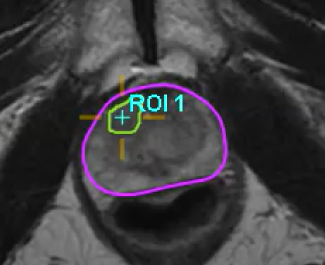
Prostate Biopsy
Prostate biopsy is the only test that can definitively establish the diagnosis of prostate cancer, identify the tumor grade, and map its location(s). It is a 10-minute procedure to remove small samples (cores) of prostate tissue with a special biopsy needle to send for pathologic analysis.
This is performed in two ways: transrectally (TR) and transperineally (TP). Transrectal is the most common method which uses an ultrasound in the rectum and small needle is passed through the rectal wall to sample the prostate. This is usually done in the office using local anesthesia (e.g. lidocaine and marcaine). Transperineal biopsy also uses an ultrasound in the rectum, but the needle is passed through the perineum (the skin between the scrotum and anus). This can be done in the office or the operating room under a light anesthetic.
Most men feel some minor discomfort with insertion of the rectal ultrasound and when the numbing medication is injected. After that, there should be very little pain when the samples are taken. After the biopsy it is common to have blood in the urine, stool and semen. The blood in the urine and stool should clear within a few days; blood in the semen may persist for 6-8 weeks.
Although complications are rare, infections occur in about 1% of cases. There is some data that infection rates are lower with TP biopsy because the needle does not puncture the rectal wall which has bacteria that can be translocated into the prostate or the bloodstream. Men with large prostates and obstructive urinary symptoms may sometimes experience urinary retention which could require placement of a foley catheter in the emergency room. Ways to minimize infection are effective including rectal cultures before biopsy to guide antibiotic choice, sterilization of the needle between samples, augmented antibiotic prophylaxis, and cleansing the anal milieu.
Various types of ultrasound machines are available which can provide different levels of detail.
The number of samples taken may vary but generally is 12 at a minimum and possibly up to 18. Both techniques can use MRI guidance if there is an MRI target. If an MRI was not done prior to biopsy, you will need to wait 8 weeks for the blood to clear before it can be done. A common misnomer is that prostate biopsy spreads cancer – this does not occur.